

Waking up with a stuffy nose or itchy eyes turns the start of any day into a chore. When indoor environmental sensitivities flare up, the culprit is almost always floating right under your nose, settled quietly into your living spaces. Most homeowners struggling with dust, pollen, and pet dander spend thousands of dollars on high-tech air purifiers or specialized bedding to find relief. Yet, the largest surfaces in your home might be working directly against those efforts.
Your floor acts as the primary landing pad for every airborne particle that drifts through your doors. Traditional textile floor coverings behave very differently than smooth, hard-surface laminate when gravity pulls those microscopic irritants down to earth. Choosing a surface that locks out debris rather than holding onto it makes a massive difference in how clean your indoor air stays throughout the seasons. Creating a healthier breathing environment does not mean you have to sacrifice a warm, inviting home aesthetic.
The structural trap of deep pile fibers
How traditional carpets behave like a giant household filter
Think of carpet fibers as millions of tiny, interlocking fingers reaching up from the floorboards. While that structure feels incredibly soft under bare feet, it functions mechanically like a giant, horizontal air filter. Gravity inevitably pulls dust mites, dead skin cells, and microscopic outdoor allergens down into those woven layers.
Standard vacuuming keeps the surface looking tidy, but the suction rarely reaches the absolute base of the backing. Over time, a dense accumulation of microscopic debris builds up out of sight, trapped deep within the porous textile grid. The dry air across Northern Colorado keeps lightweight particles floating through rooms longer, giving them plenty of time to find a permanent home deep inside those woven pockets.
The impact of everyday foot traffic on settled dust
Every single step across a fiber floor creates an invisible upward draft. Walking over a dust-laden carpet acts exactly like compressing an old sofa cushion, launching plumes of settled dander and dried particles straight back up into your immediate breathing zone.
Smooth surfaces handle gravity much differently. On a hard floor, dust remains flat, completely undisturbed, and entirely visible until it is wiped away for good. You see exactly what needs to be cleaned, eliminating the hidden reservoirs of irritants that constantly recycle back into the air you breathe.
Why non-porous laminate keeps your indoor air clearer
The benefit of a sealed wear layer
Modern laminate flooring is built from the top down to resist the elements. The exterior features a clear, incredibly dense overlay known structurally as a protective wear layer. Because this surface is completely non-porous and tightly sealed, microscopic particles cannot penetrate the core or find a place to embed.
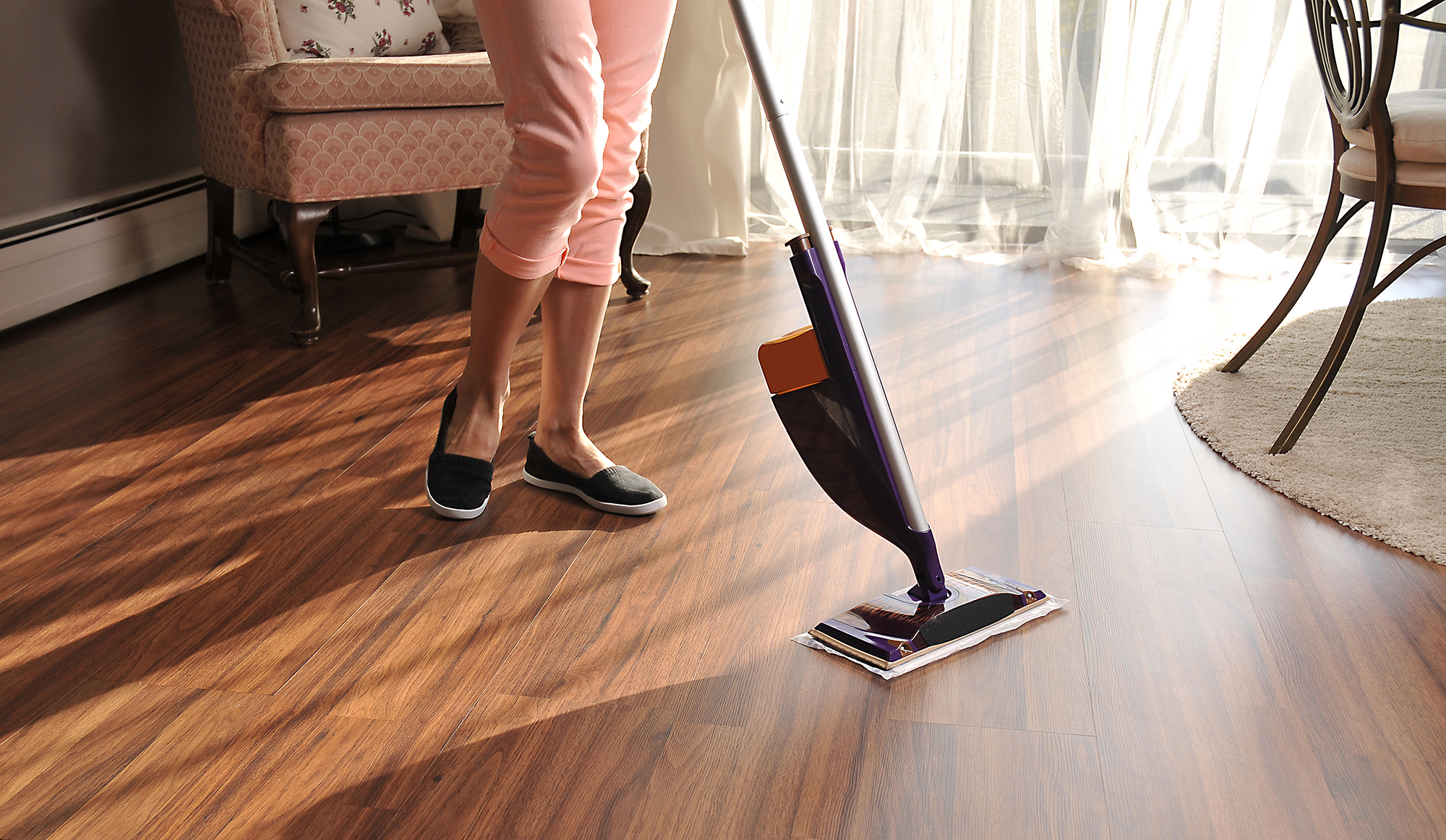
This non-porous engineering changes your entire cleaning routine for the better. Dust, pet fur, and tracked-in dander sit exposed right on the surface, making them effortless to eliminate. A quick pass with a damp microfiber mop or a hard-floor vacuum attachment lifts the irritants completely out of your living space rather than just shifting them around.
Microscopic joints that resist dust accumulation
Older generations of interlocking floors often suffered from wide gaps that collected dirt over time. Today’s advanced click-lock joints snap together with extreme structural precision, creating a virtually seamless plane across your room.
Eliminating those tiny physical recesses prevents fine dust from packing down into the cracks between planks. Debris has nowhere to hide, keeping the entire surface hygienic and easily accessible from wall to wall.
Creating a clean launchpad for an active Northern Colorado lifestyle
A home should be a comfortable launching pad for weekend adventures, not a place where you worry about what is tracking inside. Between muddy trail running shoes, wet dog paws, and the heavy dirt brought in after exploring the foothills, local floors take a beating. Laminate provides a tough, resilient surface that handles that rugged daily wear while keeping your indoor environment clear of respiratory triggers.
Managing environmental sensitivities shouldn't require spending hours every single weekend deep-cleaning, scrubbing, or shampooing fabrics. True convenience means choosing materials that fit your actual lifestyle and clean up in minutes. Evaluating different floor textures inside your actual living environment ensures you find a style that satisfies your design goals while matching your daily upkeep capacity.
Let us help you breathe easier in your own home
Swapping out older fiber surfaces for non-porous laminate is one of the most direct, practical steps you can take to control indoor dust sensitivity. We believe your flooring should support how you live, breathe, and enjoy your space every single day. Our team focuses on delivering straightforward, real-world solutions that tackle your home worries without any confusing fine print.
We want to make finding your next floor completely stress-free. Contact us to chat about your project goals, or schedule our mobile showroom to bring large, realistic laminate samples straight to your doorstep. Seeing the textures under your home's unique natural lighting and next to your own furniture ensures you make the perfect choice with absolute confidence.


